
Licence costs that grow with headcount
Every new hire adds a line to several invoices. Per-seat pricing means the bill keeps rising as the team grows, whether or not the software does any more for you.
We build the business systems off-the-shelf software can't: custom ERPs, CRMs, client portals and AI tools shaped around how you work. You own the code, the data and the hosting, with no per-seat licence fees as your team grows.







Subscriptions are the right call until the business outgrows them. These are the signs it already has.
Every new hire adds a line to several invoices. Per-seat pricing means the bill keeps rising as the team grows, whether or not the software does any more for you.

Off-the-shelf tools are built for a generic business. When the way you work is what sets you apart, the software keeps pushing it into a generic shape.

Customers in one app, jobs in another, invoices in a third. The same data gets entered three times, and spreadsheets fill the gaps only one person understands.

You pay for the whole product to get the handful of features you need, and still can't get the report you want without exporting and merging data by hand.
Every build starts from your process, not a template, and connects to the accounting, email and documents you already use.
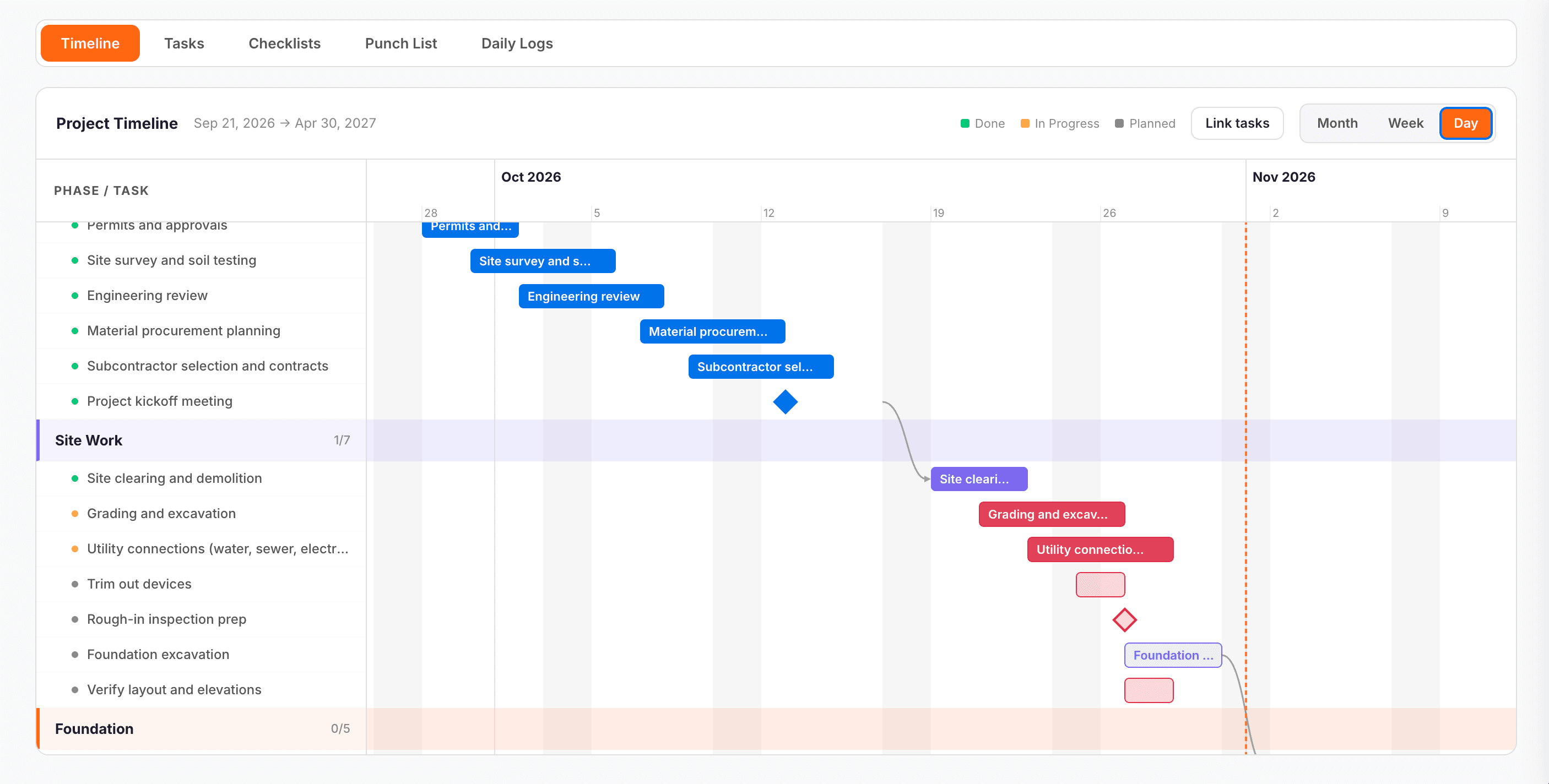
One system for pipeline, projects, scheduling, equipment and financials, replacing the spreadsheets and subscriptions in between.
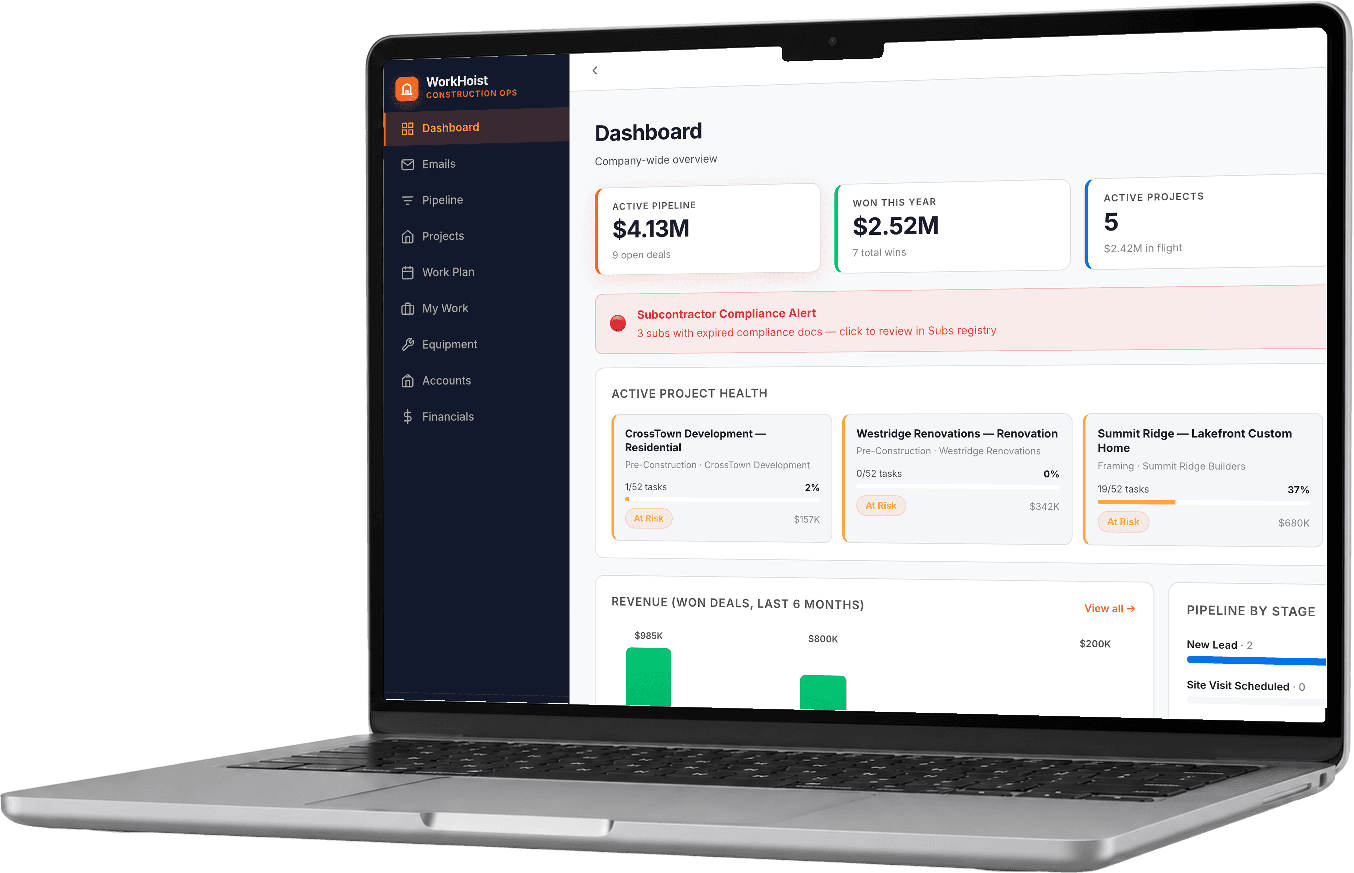
Example: WorkHoist →Customer records, pipelines and order handling shaped around how you actually sell, connected to your accounting and email.
Example: Gleam & Glory →A secure, branded view where each client sees their own project, so they stop calling to ask where things are.
Example: WorkHoist →From the Site Inspection SOP: confirm anchor bolt layout against the approved drawings, check forms and vapour barrier, then log photos before sign-off.
AI that drafts replies to inbound email for human approval, and answers questions from your own documents with cited sources.
Example: Steel Craft Builders →Pricing generated from vendor cost, invoicing and payments synced with QuickBooks.
Example: Gleam & Glory →With a subscription you rent access. With a custom build you own the system outright, and the bill doesn't grow with your headcount.
The trade-off: you're responsible for hosting and ongoing maintenance, so budget for both. For a small, stable team, per-seat software is often still the cheaper option, and we'll tell you if that's you.
The custom and AI systems in our case studies, from client-owned CRMs to AI knowledge systems and our own products.


Built with the tools behind these case studies
Every engagement follows the same four-phase model — designed so you know exactly what's happening, when it ships, and what you're getting at the end.
We audit your current tools, map your real workflows, and identify what’s broken — not what a salesperson told you to buy. Every engagement starts with understanding the operation.
We architect the solution before touching a single board, automation, or line of code. You see exactly what we’re building, how it connects, and what it replaces — before we start.
We build the system in working phases, not a six-month black box. You see progress weekly, give feedback in real time, and never wonder what you’re paying for.
Before anything goes live, your team tests it against real scenarios in user acceptance testing. We fix what they find, launch once it’s signed off, train your team on the system they’ll actually use, and stay available post-launch.
Short video stories from the teams we've built systems for.
 Client storycoming soon
What a custom build costs next to SaaS, what owning your software should mean, and when off-the-shelf is still the better call.
You work directly with the people who build your system, not a sales team who disappears after the contract is signed.
 Founder
Twenty-five years building companies, from running construction crews in London to leading platform delivery teams and consulting on systems implementation for organizations including NASA and Space Force. Michael founded TekConnected to give small businesses the same caliber of systems that enterprise teams take for granted.



If your question isn't here, ask it on the strategy call.
30 minutes. No generic pitch. We look at how your operations actually run today and tell you exactly what a build would look like: platform, custom software, or both.
