Emotous: An AI-Powered Content Pipeline From Source to Published Post Across Three Channels
The Challenge
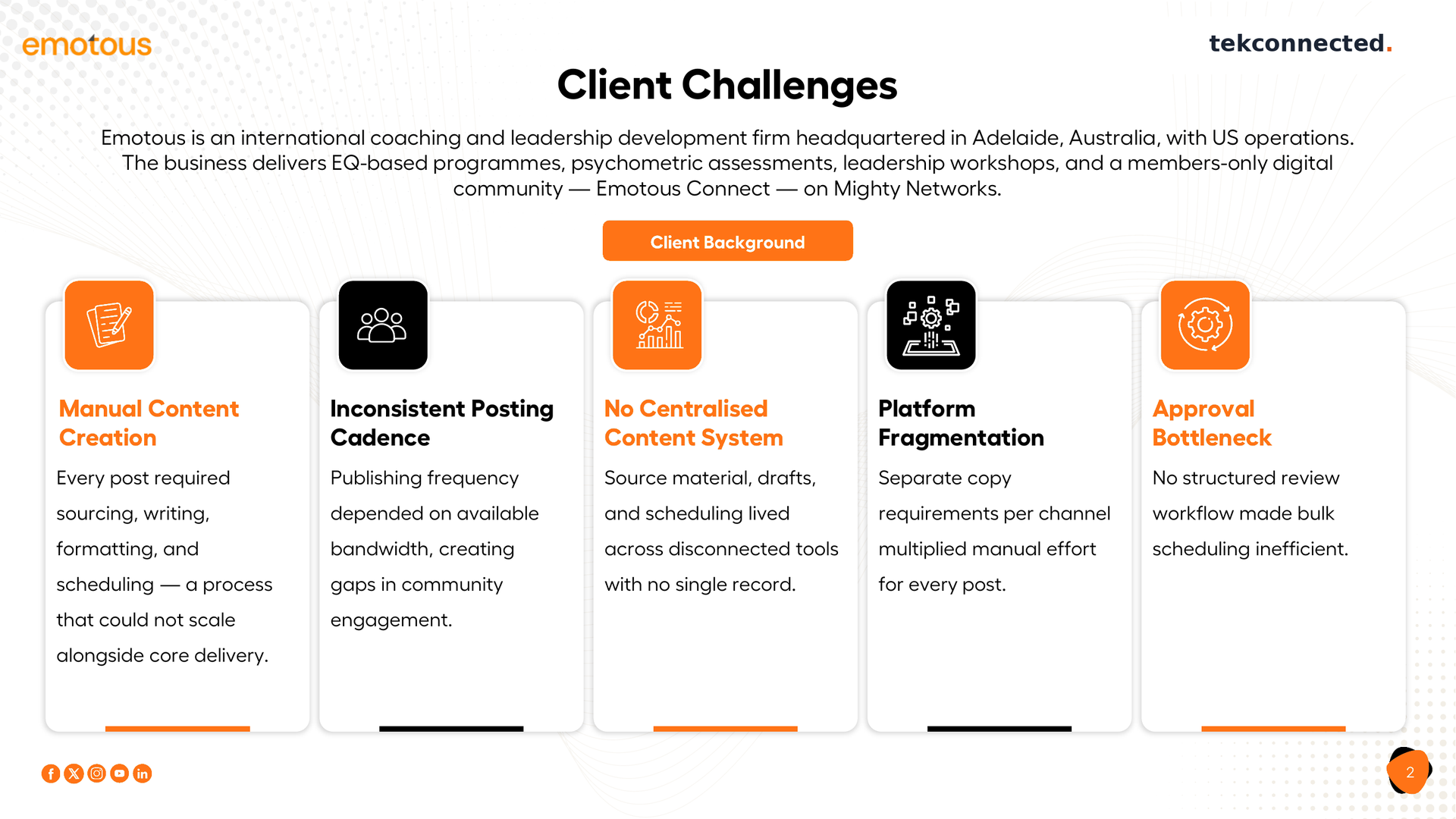
Every post at Emotous required sourcing, writing, formatting, and scheduling by hand, a process that could not scale alongside core delivery. Publishing frequency depended on available bandwidth, creating gaps in community engagement.
Emotous is an international coaching and leadership development firm headquartered in Adelaide, Australia, with US operations. The business delivers EQ-based programmes, psychometric assessments, leadership workshops, and a members-only digital community, Emotous Connect, on Mighty Networks.
Key Challenges Faced
- Manual Content Creation
- Every post required sourcing, writing, formatting, and scheduling, a process that could not scale alongside core delivery.
- Inconsistent Posting Cadence
- Publishing frequency depended on available bandwidth, creating gaps in community engagement.
- No Centralised Content System
- Source material, drafts, and scheduling lived across disconnected tools with no single record.
- Platform Fragmentation
- Separate copy requirements per channel multiplied manual effort for every post.
- Approval Bottleneck
- No structured review workflow made bulk scheduling inefficient.
The Solution
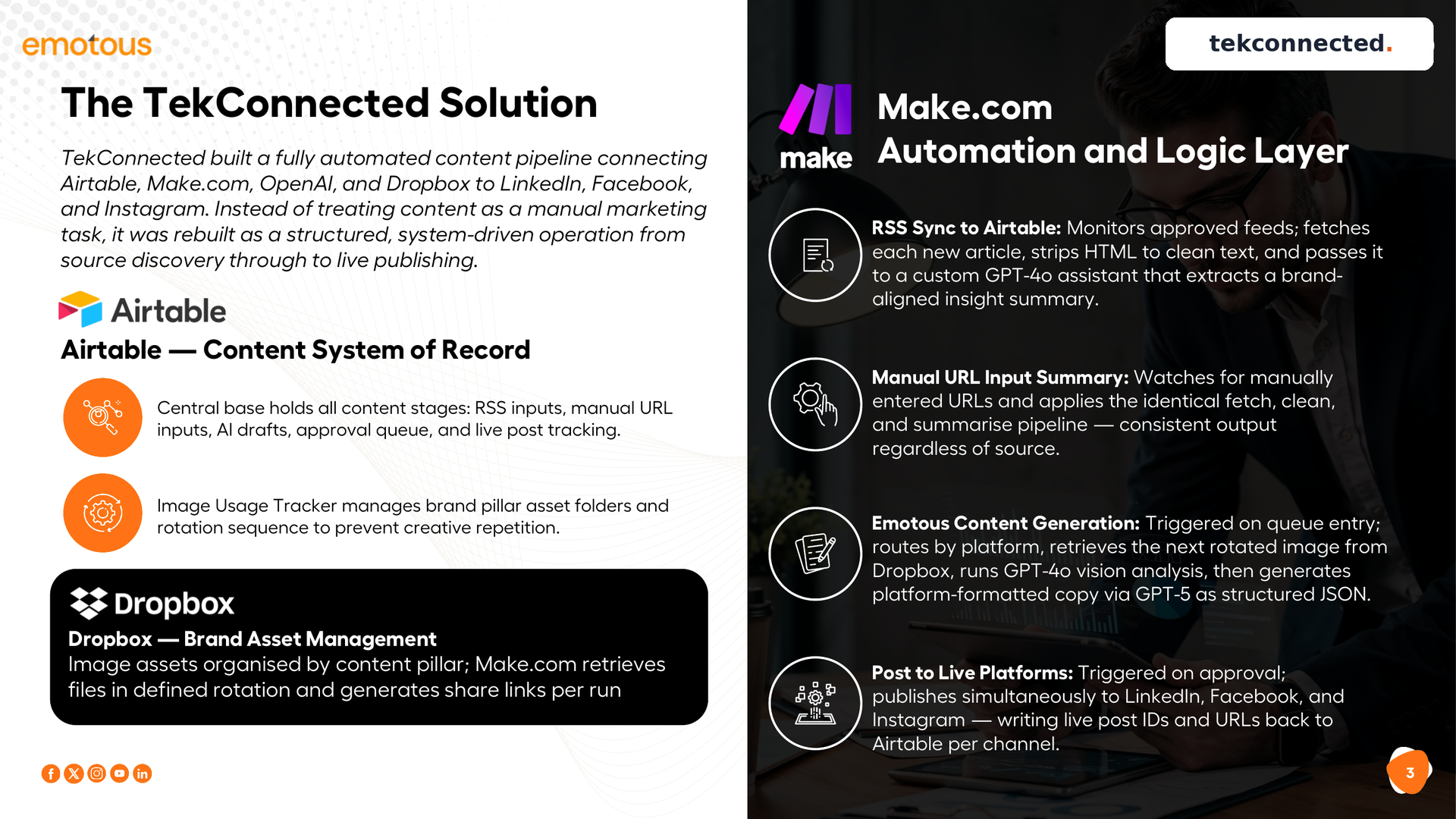
TekConnected built a fully automated content pipeline connecting Airtable, Make.com, OpenAI, and Dropbox to LinkedIn, Facebook, and Instagram. Instead of treating content as a manual marketing task, it was rebuilt as a structured, system-driven operation from source discovery through to live publishing.
Airtable as the Content System of Record
- A central base holds all content stages: RSS inputs, manual URL inputs, AI drafts, approval queue, and live post tracking
- An Image Usage Tracker manages brand pillar asset folders and rotation sequence to prevent creative repetition
Dropbox for Brand Asset Management
Image assets are organised by content pillar. Make.com retrieves files in a defined rotation and generates share links per run.
Make.com Automation and Logic Layer
- RSS Sync to Airtable
- Monitors approved feeds, fetches each new article, strips HTML to clean text, and passes it to a custom GPT-4o assistant that extracts a brand-aligned insight summary.
- Manual URL Input Summary
- Watches for manually entered URLs and applies the identical fetch, clean, and summarise pipeline, producing consistent output regardless of source.
- Emotous Content Generation
- Triggered on queue entry. Routes by platform, retrieves the next rotated image from Dropbox, runs GPT-4o vision analysis, then generates platform-formatted copy via GPT-5 as structured JSON.
- Post to Live Platforms
- Triggered on approval. Publishes simultaneously to LinkedIn, Facebook, and Instagram, writing live post IDs and URLs back to Airtable per channel.
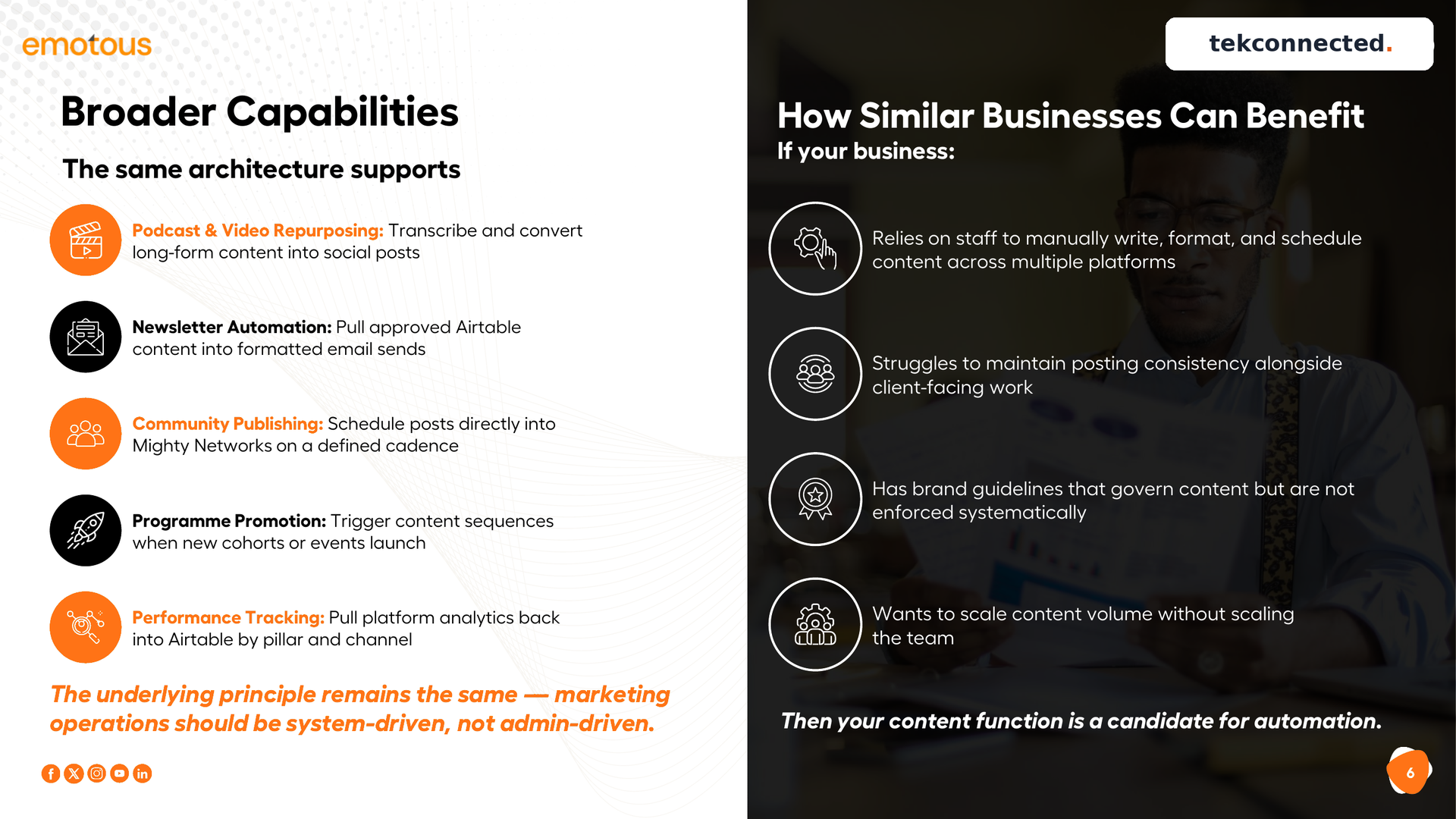
The underlying principle is that marketing operations should be system-driven, not admin-driven.
Technology Stack
Results & Outcomes
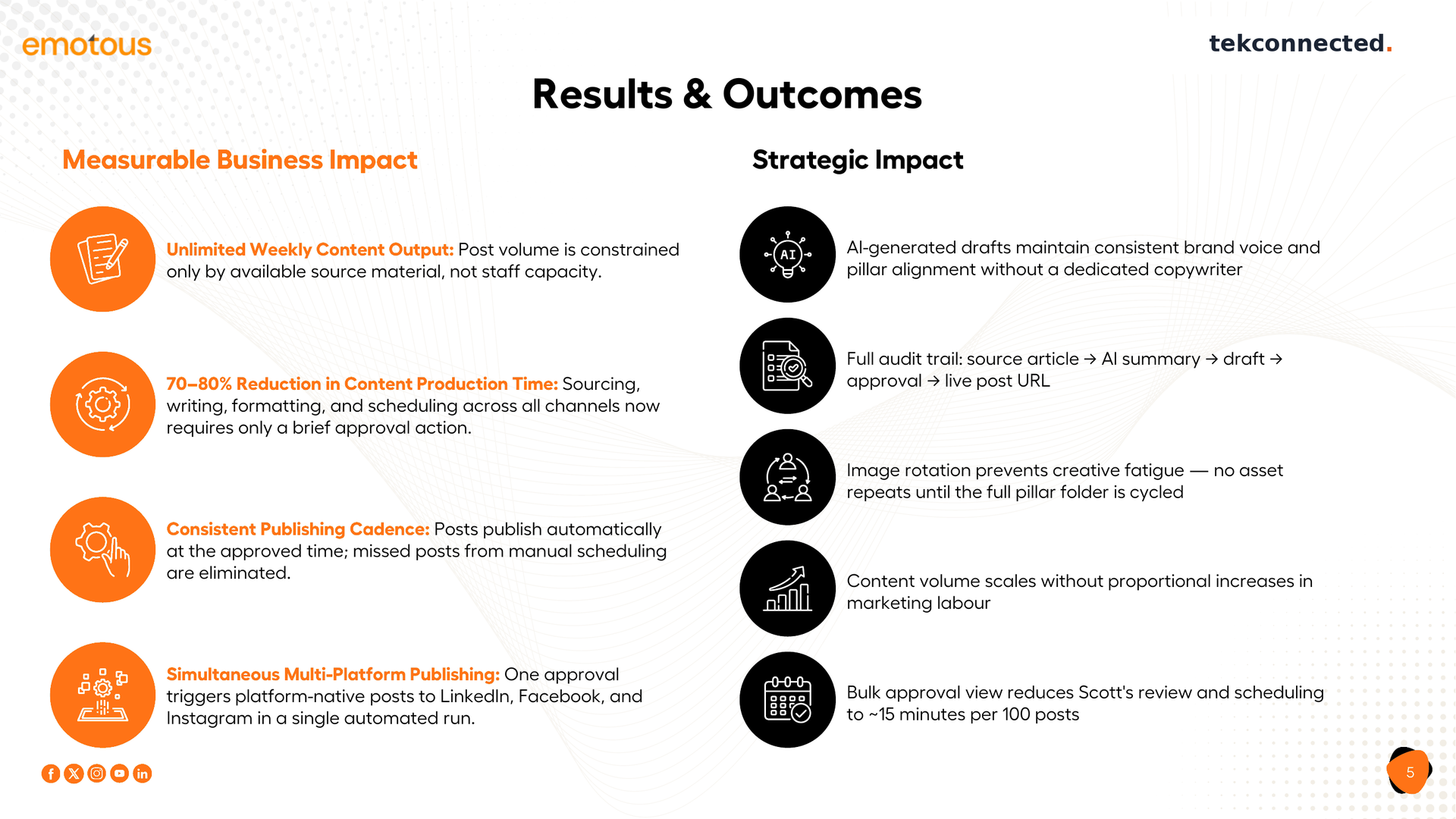
- Unlimited Weekly Content Output
- Post volume is constrained only by available source material, not staff capacity.
- 70 to 80% Reduction in Content Production Time
- Sourcing, writing, formatting, and scheduling across all channels now requires only a brief approval action.
- Consistent Publishing Cadence
- Posts publish automatically at the approved time, eliminating missed posts from manual scheduling.
- Simultaneous Multi-Platform Publishing
- One approval triggers platform-native posts to LinkedIn, Facebook, and Instagram in a single automated run.
Strategic Impact
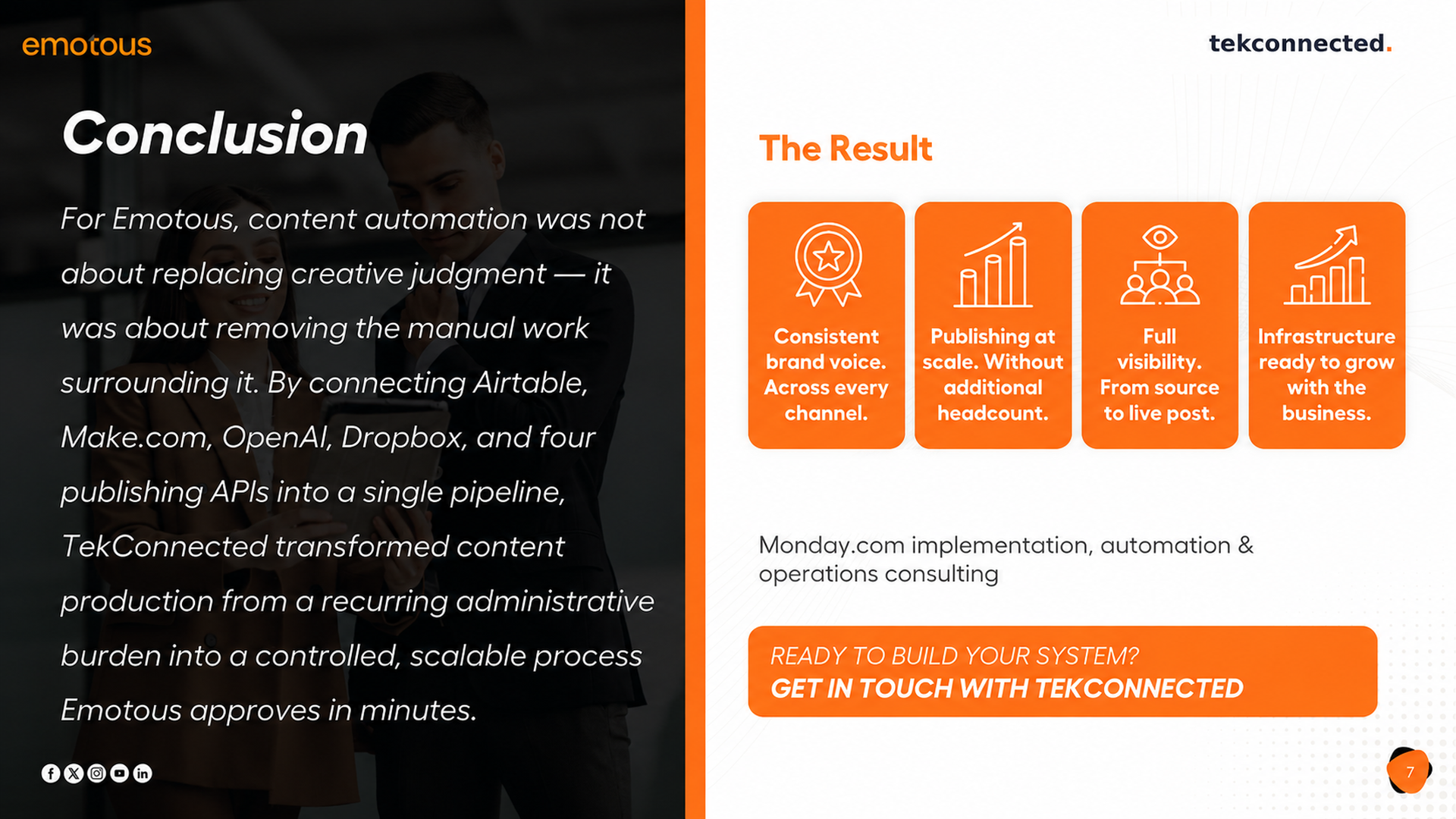
- AI-generated drafts maintain consistent brand voice and pillar alignment without a dedicated copywriter.
- Full audit trail from source article to AI summary to draft to approval to live post URL.
- Image rotation prevents creative fatigue, with no asset repeats until the full pillar folder is cycled.
- Content volume scales without proportional increases in marketing labour.
- Bulk approval view reduces review and scheduling to approximately 15 minutes per 100 posts.
Who This Applies To
This build pattern fits an organisation that:
- Relies on staff to manually write, format, and schedule content across multiple platforms
- Struggles to maintain posting consistency alongside client-facing work
- Has brand guidelines that govern content but are not enforced systematically
- Wants to scale content volume without scaling the team